
I loved reading Choose Your Own Adventure gamebooks when I was a kid. You didn’t read them linearly like other storybooks – you got to decide your own path, flip to the relevant chapters, and there were different endings! Then I went on to the longer books, aptly titled Choose Your Own Super Adventure. From there I went on to Lone Wolf, Fighting Fantasy, and eventually to full-fledged RPGs.
And that’s the thing. When I first picked up those books – and realised there was a way to “win” – I treated them like a race. In fact, I think most productivity advice treats life like a race. Pick a track, run faster, win the medal. And to some extent, that’s applicable. Productivity is about doing more.
The problem about using that racing metaphor is this – racing leads to reactive decisions. There’s only one goal, and it’s the same goal for everyone. Everyone chases the same deadlines, mimics the same life paths, and powers through the same route – even though we don’t stop to think about whether we’re headed where we want to go.
In a Choose Your Own Adventure game – and other RPGs – you get to make decisions that are fully yours. There’s nobody around to “follow” for the right decision, so your autonomy is yours. And the ending you get is also the result of your choices. True, there is a perfect ending in such games, but sometimes you might enjoy the evil ending or the middle ground ending, simply because they’re more nuanced or more interesting. You’re more invested in the ending – because you chose it.
It’s about productive autonomy.
When you take ownership, make meaningful choices, and design your own life adventure – you perform better, longer, and smarter. When you feel like you’re in control, you literally do more; as opposed to following the prescribed race path and performing on those terms.
Productive autonomy means you do more on your own terms.

Why the “race” model of productivity actually limits you
Seeing life as a race means that productivity is about speed and stamina. It means that life is driven by extrinsic goals, such as money, status, or external approval. But this actually leads to lower vitality and self-actualisation, as Tim Kasser and Richard Ryan found out. The race mentality leads to misalignment, distraction, or disengagement – which eventually leads to a slowing down.
You lose the race simply by being in it.

The Choose Your Own Adventure advantage
On the other hand, Tim Kasser and Richard Ryan found that intrinsic goals like growth, curiosity, and purpose were associated with higher wellbeing and less distress. Richard Ryan later teamed up with Edward Deci to investigate self-determination theory and found out that people who experience autonomy, competency, and meaningful connection were more motivated and productive.
That’s what you get in a Choose Your Own Adventure game. That’s what you get in many games, really – the autonomy to do it the way you want to, not the way someone else wants to. It applies to lesson design, life planning, and achieving goals.
That’s how games engage you. And that’s how you become more productive in life – by being more engaged with it.
So what’s the extended metaphor?
| Game element | Correlation to productivity |
| Choosing your own quest and objectives | Autonomy of choice increases intrinsic motivation and commitment to success |
| Feedback loops (XP, levels, streaks) | Progress tracking builds mastery |
| Exploration of the game world | Playfulness increases creativity and problem-solving |
| Player agency | Reinforces autonomy, which leads to self-determination and intrinsic motivation |
Don’t believe me? I have a friend who has a 1,787 day Duolingo streak, who absolutely commits to it every day. It’s contributed to his proficiency in music, French, and Japanese – areas which he has no formal training in.
Speaking of which, I need to go do my Duolingo now.

The evidence for a Choose Your Own Adventure approach
Looking at your life as a Choose Your Own Adventure game inserts the following elements into your life – autonomy, playfulness, meaningful goals, flow states, elevated happiness, and psychological flexibility – all of which are levers for productivity.
- Autonomy: Marylène Gagné and Edward Deci discovered that choosing your own goals to pursue (instead of having them prescribed to you) are also more likely to be achieved.
- Playfulness: Playfulness is related to cognitive spontaneity and creativity – but there are no definitive relationships between playfulness and gender and age (which means that anyone can be playful!), discovered Mary Ann Glynn and Jamieson Webster.
- Meaningful goals: Kennon Sheldon and Andrew Elliot found that self-concordant goals (goals aligned with your interests and values) are more likely to be achieved and result in greater wellbeing.
- Flow states: When you’re immersed in your tasks, like in games, your productivity increases – especially if those tasks match your skills and passions, according to Mihaly Csikszentmihalyi.
- Elevated happiness: It shouldn’t come as a surprise, but a study by Andrew Oswald, Eugenio Proto, and Daniel Sgroi revealed that happiness makes people more productive – just like how games bring us happiness.
- Psychological flexibility: Being able to reframe setbacks and staying open to change, just like changing your tactics and decisions in a game, leads to better performance under pressure as Todd Kashdan’s research revealed.
How to apply the Choose Your Own Adventure mindset and ditch the race mentality for life
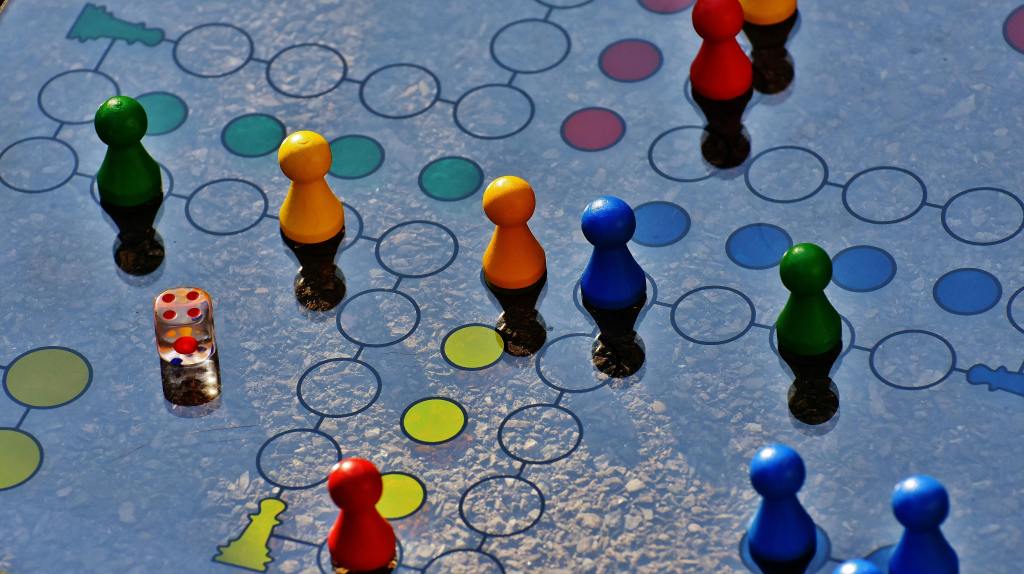
With all that in mind – how do we shed that old race mentality and start seeing life as Choose Your Own Adventure game? If you’re a gamer, you can see life as a literal RPG, MMORPG, or even an action adventure game.
Here’s how to optimise playing the game of life for you.
1. Choose the right projects and goals that align to what you want
If you’re a wizard, there’s no point in going on a major quest for an amazing sword, even if that’s what GameFAQs says. You want to go on a quest for the Ultima spell, or something that suits you. Likewise, pick the projects and goals that matter to you – especially those that align with your personal values. I know money is a factor (isn’t it always), but don’t let it be the only factor in your decision making.
2. Break your tasks into meaningful choices
All tasks are made up of choices – even the writing of this article is made up of the choice to use certain words and research over something else. What makes the difference is that the choice is meaningful, which translates into thinking about the result you want. If you want your wizard to have high Intelligence, then put your stat points there – that’s an example of a meaningful choice. Likewise, if you choose to want to more conversant and proficient at applying positive psychology (my example), choose the tasks that will get you there (for me, it’s applying it to productivity).
3. Use reflection to level up
When you defeat an enemy in a game, you gain XP. Likewise, whenever you embark on a task, take the time to reflect on the experience. That’s how you gain XP in real life, and that’s how you level up in real life.
4. Gamify your progress
Seeing your life as a series of quests, or a character skill development tree, helps you to gamify it. It lets see you it more objectively. Seeing a task as a quest gives it that air of mythical significance (and also makes it more fun), and empowers you because you chose to take on that task/quest, like in games. It’s about going on your personal Hero’s Journey. Likewise, choosing to upskill yourself is like making decisions on a skill development tree – you’re not forced to take a certain skill path, you’re making decisions to be better at that skill so that you can fight tougher foes.
5. Embrace strategic side quests
In games, you sometimes take on a side quest because you’re interested in an NPC’s story or you just want to see that part of the world. In life, sometimes you take on a project because you want to help that person or because of charitable reasons – or even just out of pure passion (that’s for me and my storytelling CCA). These sideways pivots sometimes lead to unexpected breakthroughs, just like how a random side quest might hide the most powerful armour in a game.
But of course, be strategic about it. I have a million interests, but I choose the one that aligns to my current life goals the most.
6. Tougher obstacles means you’re going in the right direction
In games, you know you’re making progress because the enemies are getting tougher. In life, you know you’re also getting better because you have more challenging choices to make. When I was younger, my biggest detractors were haters who’d flame my work online. But now I’ve discovered there are more insidious obstacles, like false friends who incessantly ask if you’ve made a loss and then harass you with hundreds of messages.
More powerful enemies is life’s way of saying you’ve also levelled up.

Not a race, but a game
Speed is still important, but life isn’t a race. If you’ve ever played Sonic the Hedgehog, then you know that while the game seems to be about speed, it’s actually control and choices that matter more (because blind speed will lead you to death in the game).
Likewise, seeing that your life is a series of choices – positive autonomy – means that you can do more, because you do more of what matters to you.
Because when you do do more of what matters to you – that’s real, positive productivity.
References
Deci, E. L., & Ryan, R. M. (1985). Intrinsic Motivation and Self-Determination in Human Behavior.
Csikszentmihalyi, M. (1990). Flow: The Psychology of Optimal Experience.
You might also want to read:
 Happiness for Busy People
Leave a comment