
Welcome to your personal embassy
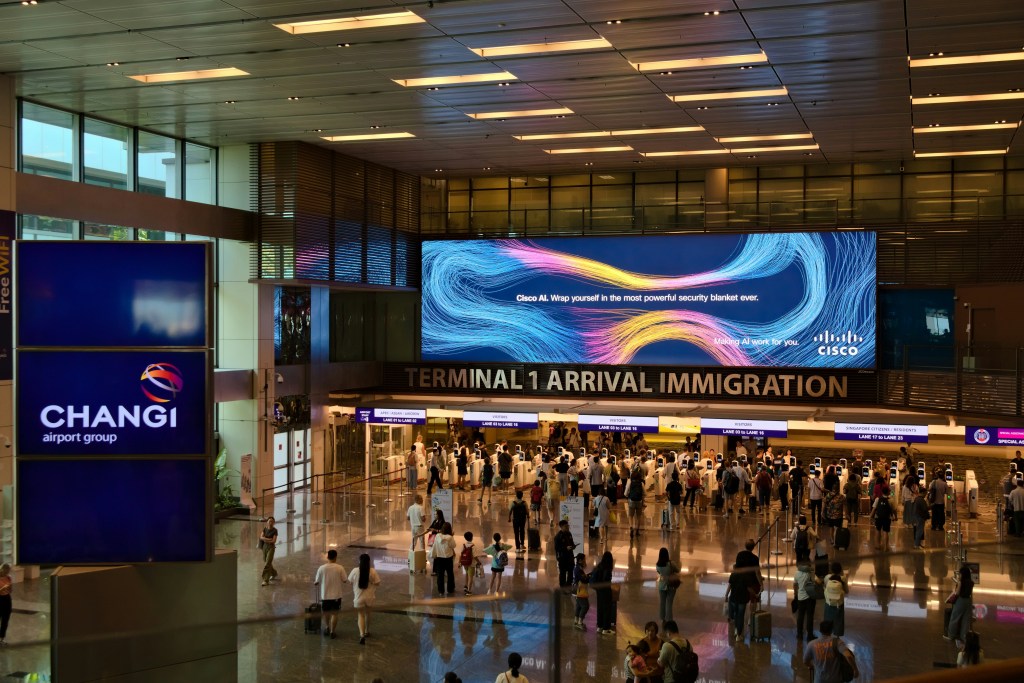
I recently had to go through a rigorous process of obtaining a visa, which made me reflect on how countries maintain border control. Having written an Immigration & Checkpoints Authority (ICA) drama before, Point of Entry, I’m also familiar with the rigorous processes that Singapore has in place for those seeking work and travel visas, as well as international visitors.
This made me realise – while countries are ruthlessly selective about whom they allow into their borders, people can be rather laissez faire about who gets access to them.
Why?
Because it can be hard to say no. Because when you’re a busy person, you assume that everyone is busy too (so they only ask because they really need it). Because sometimes, you’re “too nice”.
The thing is – virtually every good country has strict processes, copious forms, and lengthy interviews if you want to apply for a visa. Yet just a year ago, I was tolerating ignoramuses telling me they’re “artistic” because they don’t study, aged spinsters lecturing me on how men are not allowed to say no to women, and strangers asking for my time and then turning up 20 minutes late.
It’s made me realise why countries are so selective of whom they let in – because even just one miscreant can wreck the entire country. And if that’s the case for a nation, wouldn’t it also mean that just one cockalorum can inflict incredible damage on your life?

Understanding personal border control
To be absolutely corny, let’s pretend that you, dear reader, are a country. Let’s pretend you’re a country called “You-topia”. Please don’t throw rotten tomatoes at me.
You-topia is a fantastically run country. To enter its borders, you must queue. You must show your passport. You must get your passport stamped. You must answer some polite but probing questions. You must let the guards do a security check. And you would willing do all that, because You-topia is an amazing country. In addition, going through such a rigorous process also assures you that all other people inside You-topia have been similarly vetted, and you don’t have deplorable folk inside.
Countries don’t let everyone in because they understand a fundamental truth. Unlimited access leads to chaos, resource depletion, and an erosion of the values and principles of what makes that place so special and desirable in the first place.
For us humans, personal boundaries are the limits and rules we set for ourselves within relationships. It doesn’t just mean being able to say “no” to others when we want to (although this is most often the case when we talk about “personal boundaries”), but it also means being able to open oneself up for intimacy.
Basically, it means being selective so that the right people get the right level of access at the right time.
Without that, anyone can waltz into our lives without interviews, intent declaration, or screening for red flags. You-topia would be full of energy vampires going “ugh, it’s all about whatever I want, whenever I want it.”
So how can we set our boundaries like countries do?

Setting personal access requirements like a visa application process
When you apply for a visa, you often get a reminder along the lines of “Persons who overstay their visa will be banned form future entry.” Similarly, drawing a boundary might be: “People who consistently disrespect my time will find themselves with less access to it.”
I knew this unemployed graduate who didn’t reply to messages, whose reason was some variation of “ugh, I didn’t feel like replying.” This also included time-sensitive messages that benefitted that individual. After a while, I realised my time was consistently disrespected – and thus, I limited access to it.
But of course, you can’t really go around telling people you meet that. Neither can you conduct a visa interview with every new person you meet. What you can do, however, is to do a mental interview and screen new individuals by asking yourself the following questions:
- Why does this person want access to my time and energy?
- Why does this person really want to get to know me?
- What does this person contribute to my life and wellbeing?
- What value does this person add?
- Does this person respect my existing boundaries and commitments?
- Can this person handle it if I am not available?
You-topia is effectively asking:
- Why do you want to enter this country?
- How long do you plan to stay?
- Do you pose a risk?
The last question – “Can this person handle it if I am not available?” – is incredibly pertinent.
There was an acquaintance who knowingly harassed me during a busy period. I got bombarded by messages from an unknown number. When I asked who it was, it turned out to be said acquaintance – who then bombarded me for not recording that number (which I had no reason to). I realised a bit too late that I hadn’t ever asked the question of whether this person can handle it if I am not available – and so, I had to revoke that person’s access to my life.
Setting boundaries is about asserting your needs. When you express your needs and limits clearly, you experience lower stress, higher self-esteem, and better emotional regulation (Speed et al. 2018).
Setting boundaries is self-care and productivity, not selfishness.

Determining the purpose of people in your life like how different visas have different purposes
Not all visas are equal. You can’t work on a student visa, nor can you own a business with a tourist visa. Different visas are for different purposes.
Similarly, different relationships in your life are for different reasons. Defining their purpose helps you set better boundaries. In your life, you could have:
- Clients
- Colleagues
- Work friends (colleagues who are also friends)
- Acquaintances
- Hangout friends
- Close friends
- Associates
- Hobby friends
Granting them all the same level of access to you is not feasible – so defining the access they have to you is vital for boundary setting.
The other thing about border control is this – immigration officers are trained to notice red flags. Things like vague answers, inconsistent stories, or suspicious motivations.
Likewise, you should be trained to notice red flags. Like people who guilt-trip, overstep, ignore your needs, or somehow always have a crisis.
Ultimately, you should trust your gut. Your nervous system often picks up danger before your brain does (Porges, 2011), so micro-signals of discomfort can act as your internal immigration officer for bad actors.
I knew this person who triggered so many red flags. From being bigoted about people who use pronouns, to being rude and accusatory to the spouse in front of others, to deriding friends’ appearances behind their backs. I disregarded my gut and gave this person the benefit of the doubt many times, and unsurprisingly, this person turned out to be bad news.

The art of selective access, or: Not everyone gets a visa
The other thing about visas is this – not every visitor to a country gets a long-term visa. Some are relegated to tourist visas. Some can only go into the transit zone.
So it should be for people in your life. Some people can, and should have long-term access to you. Good people.
Others are fine only for short periods of time, like a tourist visa. And many others should only ever be in your transit zone, like the cashier at McDonald’s or the auntie you sit next to on the bus.
But if you’re a people-pleaser like me… then it gets uncomfortable. It gets uncomfortable to say no, you don’t have access to me.
So take heart in the fact that countries reject applications all the time, and they don’t lose sleep over it.
And you should, too.

The science behind why setting boundaries is good for you
Setting boundaries satisfies three of the most important psychological needs we have (Deci & Ryan, 2000), which are:
- Autonomy: the freedom to choose how to spend your time.
- Competence: the ability to manage your energy wisely.
- Relatedness: surrounding yourself with people who respect you.
This translates directly into wellbeing, which in turn fuels productivity. In positive psychology, the PERMAH model of wellbeing demonstrates that Positive Relationships (R) and Meaning (M) are critical for long-term happiness. But not all relationships qualify. Only those where boundaries are mutual.
Also, individuals with stronger work-life boundaries have better focus, less stress, and significantly improved work performance as well (Kossek et al., 2012).

Enforcing your boundaries
Countries have consequences for boundary violations. But they also have allowance for genuine mistakes that may come from ignorance of different cultures and rules. So here’s my suggestions for enforcement mechanisms:
- First offence: Clear, kind communication about the boundary (informative)
- Second offence: Automated consequences like less availability or reduced access (punitive)
- Repeat offences: Temporary or permanent reduction in access (reductive)
Just like how countries also have standard responses for violations, you can also have certain go-to phrases when there is a boundary violation request.
- Urgent requests that are not urgent: “I will look at this on [specific time].”
- Guilt trips: “I understand you’re disappointed and I care about you. My decision stays the same.”
- Boundary testing: “We have discussed this before. I am not comfortable [specific behaviour].”

Better boundaries for a better life
Countries have tight border controls to protect their citizens. It’s to ensure that productive, upright, not-playing-loud-music-on-public-transport citizens are protected from pollutive malefactors. It’s so that the good people can continue to do more good.
Likewise, setting boundaries means you have more time, attention, and access to give to the people who matter to you. The people you love. The people who love you.
So if not for yourself, draw boundaries for the people closest to you. They deserve you more.
Remember that it’s ultimately for you.
You-topia.
You might also want to read:
References
 Happiness for Busy People
Leave a comment