
Unresolved post-credit scenes
Do you remember the post-credits scene for Iron Man (2008)? Chances are, probably not – because it’s already been resolved. The scene has Nick Fury talking to Tony Stark about the Avengers, which paid off in the multitude of Avengers movies we now have.
However, I’m sure you remember that Harry Styles appeared as Eros in The Eternals‘ post-credits scene. Or that Charlize Theron appeared as Clea in Doctor Strange in the Multiverse of Madness‘ post-credits scene. Or even that Brett Goldstein (okay maybe you don’t remember this actor’s name) appeared as Hercules in Thor: Love and Thunder‘s post-credits scene.
There’s a reason for that, and it’s called the Zeigarnik effect. It’s powerful enough that Marvel Studios is even engineering it by adding a post-credits scene to Avengers: Endgame (which didn’t have a post-credits scene previously) so that we’ll think about it all the way into Avengers: Doomsday.
Because we can’t stop thinking about it until it’s been resolved.
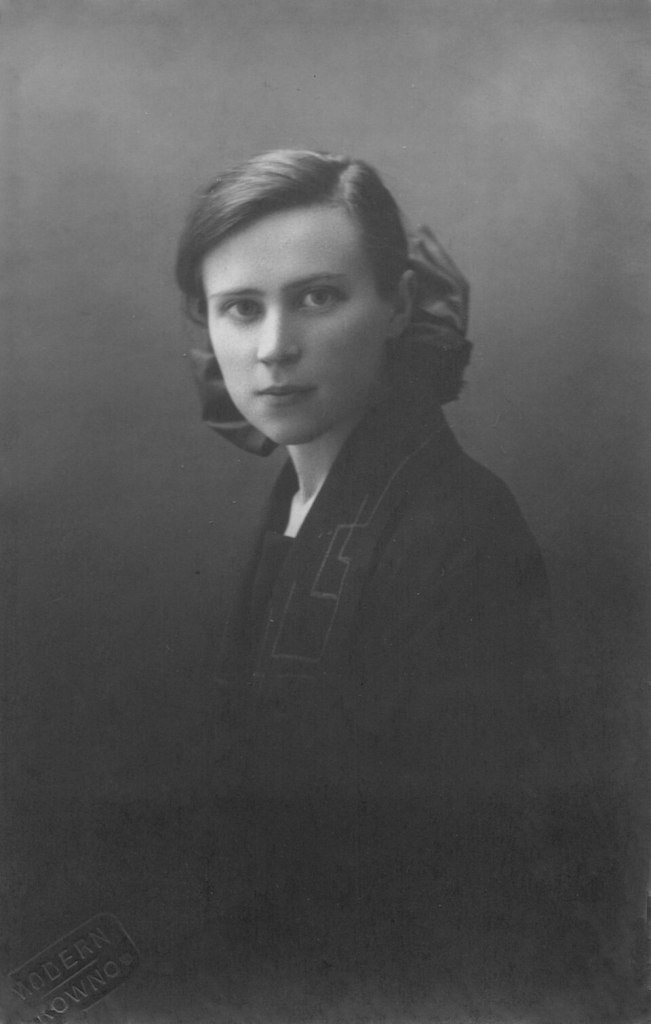
Bluma Zeigarnik and the waiter
The Zegarnik effect states that we remember incomplete or interrupted tasks better than we remember completed tasks (Denmark, 2010). Hence, we remember the post-credit scenes that haven’t been resolved, but we remember the post-credit scenes that have been resolved (case in point – do you remember which movie’s post-credits scene first showed us Thanos?).
The story goes like this. Bluma Zeigarnik (of the titular Zeigarnik effect) had Kurt Lewin (who developed field theory) as her dissertation supervisor.
What’s field theory? It’s actually Gestalt field theory, and it tells us that when we start a task, we create a “tension system” or “quasi-need” that pushes us to finish that task. Interruption is what keeps this tension active (Macleod, 2020). It’s the reason why toy collectors have intrusive thoughts to collect every single item to complete the set – the incomplete set creates a tension system, according to Gestalt field theory.
Kurt Lewin frequented a restaurant where the waiter had an amazing memory for getting everyone’s orders right, even being able to recite them after they ordered. However, if Kurt finished his meal and then returned to the restaurant half an hour later – the waiter would have no memory of the order. The waiter sometimes had no memory of Kurt himself!
That was when Bluma Zeigarnik made the connection. Her dissertation was that people recalled interrupted tasks about twice as well as completed ones in the lab. Those tasks included puzzles, mathematical problems, folding and so on. (Macleod, 2020).
It’s the reason why we can memorise facts for an exam, but forget all about it just a month after the exam.

All about the Zeigarnik effect
Does this apply to all things? Does everyone remember interrupted tasks better than completed tasks?
It depends. There are three conditions that will magnify the Zeigarnick effect. First is that it is amplified if the person’s self-esteem and identity is tied to the interrupted tasks. Second, it is more likely to appear if the interruption of the task is random. Third, the Zeigarnik effect is more likely to appear if the person is genuinely interested in doing well for hte interrupted task (Denmark, 2010).
That being said, is the Zeigarnik effect therefore a type of intrinsic motivation? No (Reeve, 1986). If the task solely relies on completion as its only metric, then the Zeigarnik effect is present. But if the task has self-efficacious performance feedback, meaning that you’re told you can do better and you have competency in it – then the Zeigarnik effect disappears and is replaced by intrinsic motivation.
The Zeigarnik effect can be seen in TV show or movie cliffhangers (24, anyone?) and even in education. Talking about the next lesson’s topic at the end of a class, or even just posing a question will keep the unfinished task “open”.
It’s like running a background task in your brain’s operating system. In a way, it’s multitasking – because you’re “doing” two tasks at once.

Leveraging the Zeigarnik effect for positive productivity
The Zeigarnik effect is just that – an effect. It’s neither positive nor negative. It’s how we use it that makes it positive or negative.
That’s where positive psychology comes in. Using it as a lever, we can get the Zeigarnik effect to make us more productive in our daily tasks.
1. Use it for undesirable tasks
For instance, we can use the idea of framing and trigger the Zeigarnik effect, such that it becomes the ignition engine for tasks we don’t want to do. Think of a task that you don’t want to do (like your laundry) and do the first step. Just the first step. You don’t have to do any more.
What the Zeigarnik effect will do is to turn it into a nagging feeling, that will eventually lead you to complete the rest of the task later.
2. Use it to trigger higher performance
Setting specific and difficult goals leads to higher performance (Locke & Latham, 2002). But come on, difficult goals are effortful. They’re not the most easeful thing to do.
By starting on step one of the goal first, we can let the Zeigarnik effect build up and thus create the motivation for us to complete it. What this means is that your next attempt at the goal will be powered by Zeigarnik effect motivation, which makes it easier to do. Hence it improves your chances of completing that specific and difficult goal, resulting in elevated performance.
3. Combine it with flow
To improve the Zeigarnik effect and make it more desirable – use it for long tasks that generate flow. True, the flow itself will make you want to do the task. But adding motivation from the Zeigarnik effect won’t hurt.

The dangers of the Zeigarnik effect
However, there are some dangers if you overuse it. It can be negative, if used negatively.
Leaving too many open loops can create chronic stress and subconscious anxiety. It’s like how you have too many apps running in the background of your computer. Open too many programmes, and your computer slows down. Your brain will, too – but in the form of stress and anxiety.
So be mindful of it. Some things just cannot and should not be done. Some things should be let go of. Some things should just go straight into the dustbin.
You may realise this if you’re always feeling like you have a backlog, or you get disrupted sleep from mental to-do lists, or you feel burnout even though by all accounts you’ve been greatly productive.

Triggering a productive Zeigarnik effect on purpose
Here are some ways you can use the Zeigarnik effect to boost productivity.
1. Spend 2 minutes on a dreaded task in the morning
In productivity advice, you’re supposed to eat the frog the first thing in the morning – which is to do the most difficult thing in the morning.
But it absolutely sucks to have to do something shitty first thing in the morning. I mean you’re sleepy, it’s probably cold, and it’s such a suboptimal time to do it first.
So just spend 2 minutes on it. 120 seconds. This creates gentle Zeigarnik tension. Your brain creates that open loop and later on, it will nudge you back towards the dreaded task (Caron & Wallach, 1957), allowing you to finish it earlier with ease.
2. Leave strategic cliffhangers
Since the Zeigarnik effect works like cliffhangers, do just that. Don’t stop at the end of a sentence – stop mid-sentence (Rose, 2022).
It is difficult because you just want to finish the whole damn thing. But that’s the Zeigarnik effect at work! And that’s how you are able to pick up later with more ease, because it’s been percolating in your head all this while.
3. Split tasks into micro-tasks to combine it with intrinsic motivation
Remember how the Zeigarnik effect is not intrinsic motivation? The great thing is that you can then pair it with intrinsic motivation to get yourself to accomplish more.
Split a task into smaller, bite-sized goals. Each accomplished mini-goal boosts your self-efficacy, which increases your self-efficacy. But since the entire task is unfinished, the Zeigarnik effect will kick in to keep you at it.
It’s an upward spiral of motivation to get things done.
4. Create day-end closure rituals
The Zeigarnik effect can be deleterious if overused – so manage its effects. It’s meant as a reminder, rather than as an everpresent cloud hanging over your head.
At the end of each day, list all of the things you’ve accomplished – I list them was “WINS” in my list. But I’ll also create a list of tasks I need to do the next day, so that it’s committed to paper rather than my brain. I know I won’t forget them, so I don’t keep remembering them in my sleep.
5. Keep a notepad in the toilet
The Zeigarnik effect is what creates our shower thoughts (or poop thoughts). Regardless of when the thoughts come, they often come in the toilet. So keeping a notepad in the toilet helps you pen down those ideas when inspiration strikes.
Just remember to wash your hands after that.

Your brain wants closure, so give it healthy closure
Ultimately, the Zeigarnik effect is a way to “multitask” while single-tasking. It helps you to remember and complete what matters most to you.
So use it to start on the important work, stick to the meaningful work, and complete the impactful work. Get your brain – and your nervous system – on your side by leveraging the Zeigarnik effect to keep the important things in your subconscious.
Of course, like any tool, it can be misused – so remember to have closure at the end of each day so that you can switch off or minimise the Zeigarnik effect when you need to rest.
What’s the next important (but dreaded) task that you’ll spend 2 minutes on so that you can get the Zeigarnik effect to work for you?

You might also want to read:
References
Caron, A. J., & Wallach, M. A. (1957). Recall of interrupted tasks under stress: A phenomenon of memory or of learning? The Journal of Abnormal and Social Psychology, 55(3), 372–381. https://doi.org/10.1037/h0042808
Denmark, F. L. (2010). Zeigarnik effect. In I. B. Weiner & W. E. Craighead (Eds.), The Corsini encyclopedia of psychology (4th ed., pp. 1873–1874). John Wiley & Sons. https://doi.org/10.1002/9780470479216.corpsy0924
Rose, H. (2022). The psychology of unfinished tasks: The Zeigarnik and Ovsiankina effects. Ness Labs. https://nesslabs.com/unfinished-tasks
MacLeod, C.M. Zeigarnik and von Restorff: The memory effects and the stories behind them. Mem Cogn 48, 1073–1088 (2020). https://doi.org/10.3758/s13421-020-01033-5
Reeve, J., Cole, S. G., & Olson, B. C. (1986). The Zeigarnik effect and intrinsic motivation: Are they the same? Motivation and Emotion, 10(3), 233–245. https://doi.org/10.1007/BF00992318

 Happiness for Busy People
Leave a comment