
Taking Stock
While it’s important to do, it’s just as important to be. To stop, to appreciate, the savour, to reflect, to consider, to breathe.
And that’s what I’m doing here. It’s not going to be my usual productivity-focused article. It’s going to be about my thoughts on my Master’s education.
My Master of Applied Positive Psychology (MAPP) at UPenn has been an absolutely amazing ride so far with all the doing (assignments, lectures, discussions, interventions) but I haven’t taken the time to sit down and just… be.
As the first semester draws to a close, it’s time to take stock of my MAPP. What has it been like? How has it changed my life? Would I do it the same way all over again?
One thing is for sure.
It has been life-changing.
It didn’t feel like it while I was in my first semester – mainly because I was living my life and I was way too busy to realise that life has changed, and for the better.
As all good stories go, I’ll start at the beginning.
How My Positive Psychology Journey Began
I have The School of Positive Psychology to thank for my journey to MAPP.
I signed up for their Graduate Diploma in Applied Positive Psychology (it’s now been expanded to a Graduate Diploma in Applied Positive Psychology and Wellbeing) and attended my first module in June 2024.
Due to scheduling concerns, I took the classes out of order – meaning that the first module I took was the most advanced module of the course, dealing with positive psychology in the context of organisational development. I felt like an impostor and nervous and so…
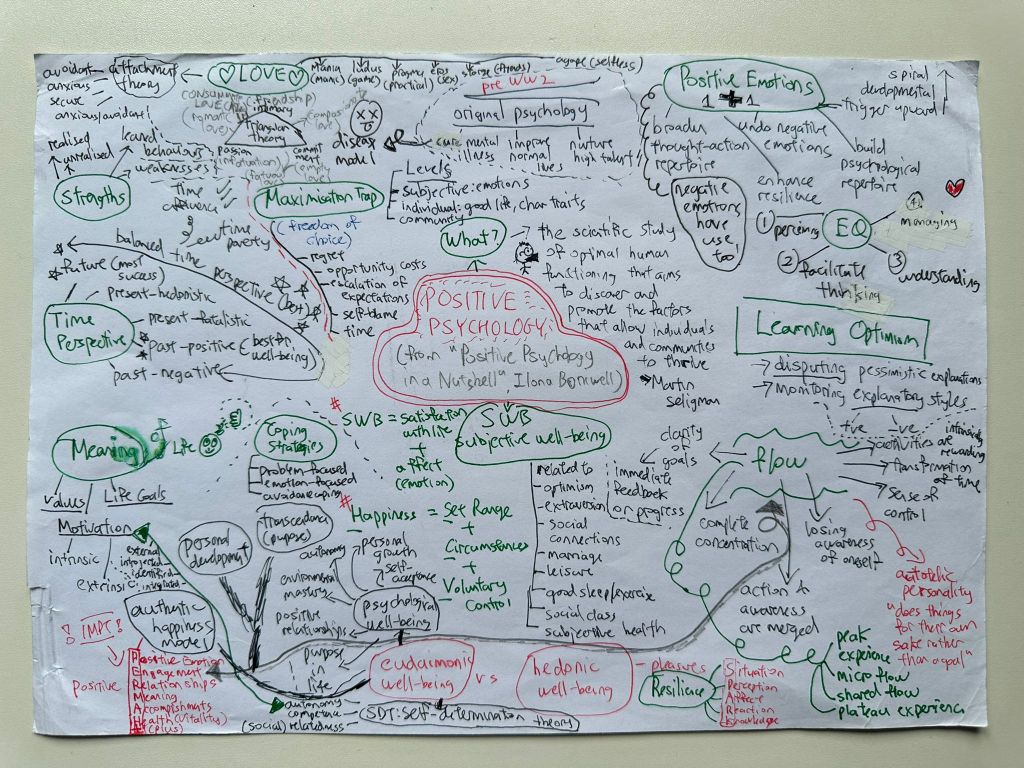
I gave my self a crash course in positive psychology by reading Ilona Boniwell’s Positive Psychology in a Nutshell and creating a mindmap of the concepts learned.
I only understood those concepts at a very surface level… but they felt right. They felt like the principles behind how I thought ideal behaviour was. They felt like the theories explaining why I thought certain behaviours were right.
And attending my first module sealed the deal.
Positive psychology resonated so much with me that I wanted to take the MAPP at UPenn – where the father of positive psychology, Martin Seligman, resided.

The Master of Applied Positive Psychology at the University of Pennsylvania
In August 2024, I signed up to learn more about Penn’s attended the virtual information session in November 2024. It’s been over a year since then!
I submitted my application in the first quarter of 2025, went for the interview, and… waited.
Waiting for the results of my application was the hardest part. That inability to do anything but just wait for the results. Somehow or other… I had come up with a positive psychology intervention (PPI) that helped manage that process, and I also had the support of some very good friends.
I couldn’t believe it the day I got in. I thought it was a scam call. I actually didn’t really believe it until I got the email.

All The Readings
One thing that MAPP has done has increased my reading and integration speed.
When I applied for the Master of Applied Positive Psychology (MAPP) at UPenn, I knew there’d be a lot of reading – but I didn’t expect it to be so intense.
I promised myself I’d complete the optional readings (and I have completed all the planned optional readings! but not the ad hoc optional readings though) because I wanted to make the most of my education. When else would I be in the mood to do 10 readings a day?
I also had the expectation that MAPP would be very academic. It is, there’s an average of 1 essay per week. And I appreciate the mindful curation of all the readings – across a range of genres, spanning the gamut in topics and perspectives. The knowledge and insights I’ve gained this semester alone probably outweigh what I’ve learnt in the past 5 years.
I read so much more now. I readily reach for more notes when I’m waiting for something (instead of my mobile phone) and even when I’m not studying, like during this holiday break – I choose to read instead.
MAPP has given me back my identity as a reader.
But that’s not the most valuable part.
Other People Matter
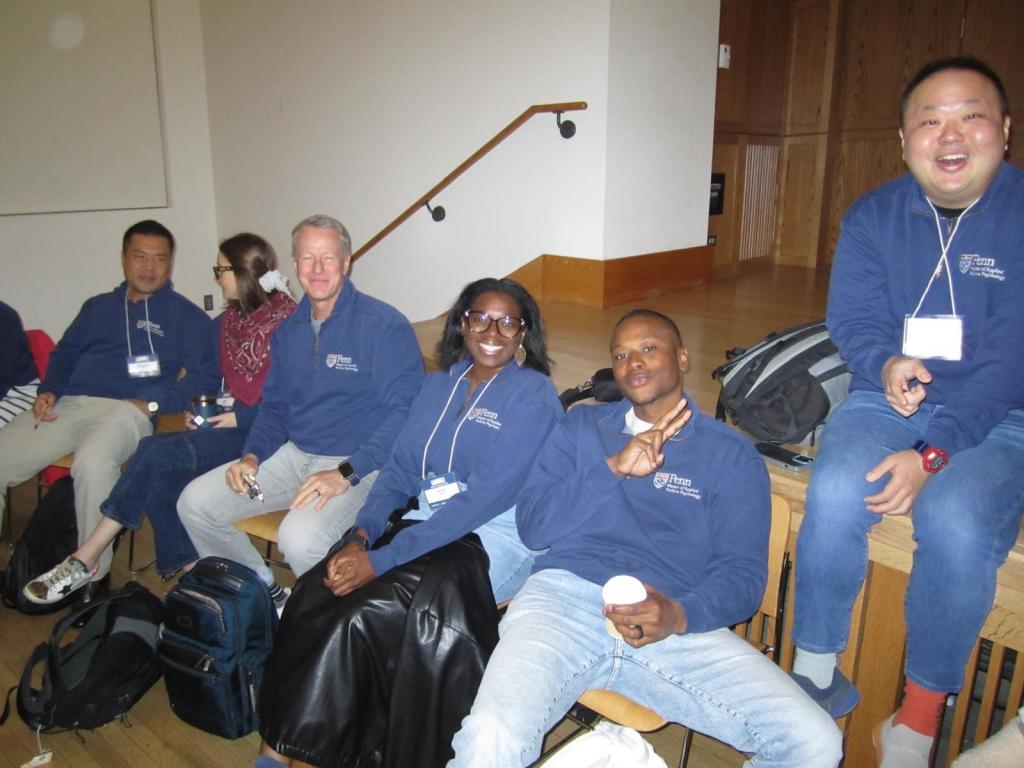
The most valuable part of MAPP has been the people.
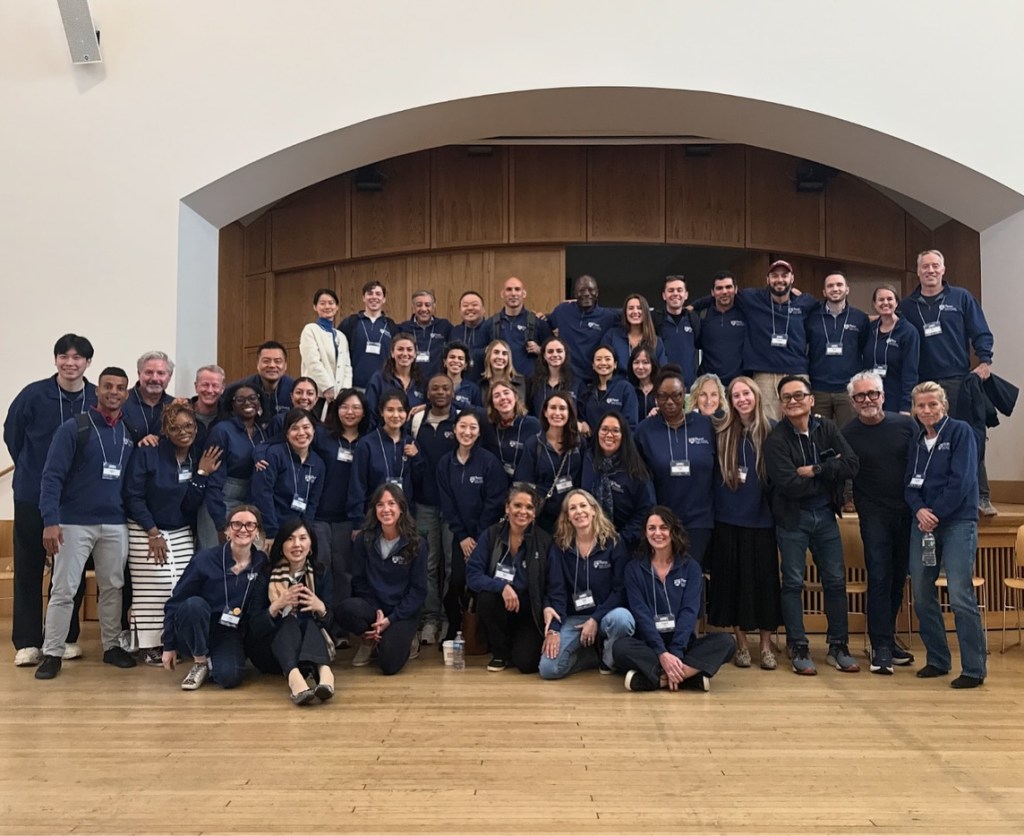
My classmates.
These are some of the most brilliant people in the world. These are people with multiple Master’s degrees, PhDs, and accomplishments that could rival a mountain. These are people with skills and experiences and aptitudes that are in a completely different league from mine.
And I get to study alongside them.
I get to study alongside them!
I don’t know what I did to earn this privilege of studying alongside them – and I don’t even think it’s something you can earn.
It’s such a huge honour to be able to call them my classmates – and an even bigger honour that they would call me their classmate. That I would be even considered as being in the same category as them is something beyond my wildest dreams.
The more I learn about them, the more I realise how incredible it is that I get to rub shoulders with them.
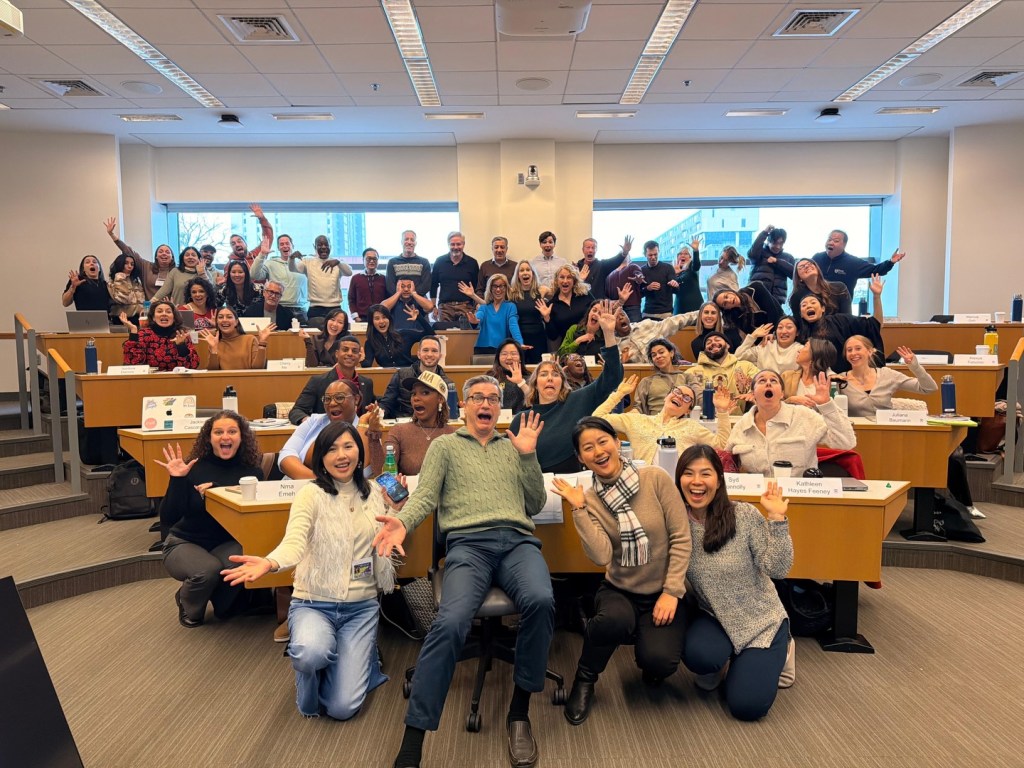
MAPP.21, it’s an honour that you would count me as one of you.
The Most Brilliant Minds
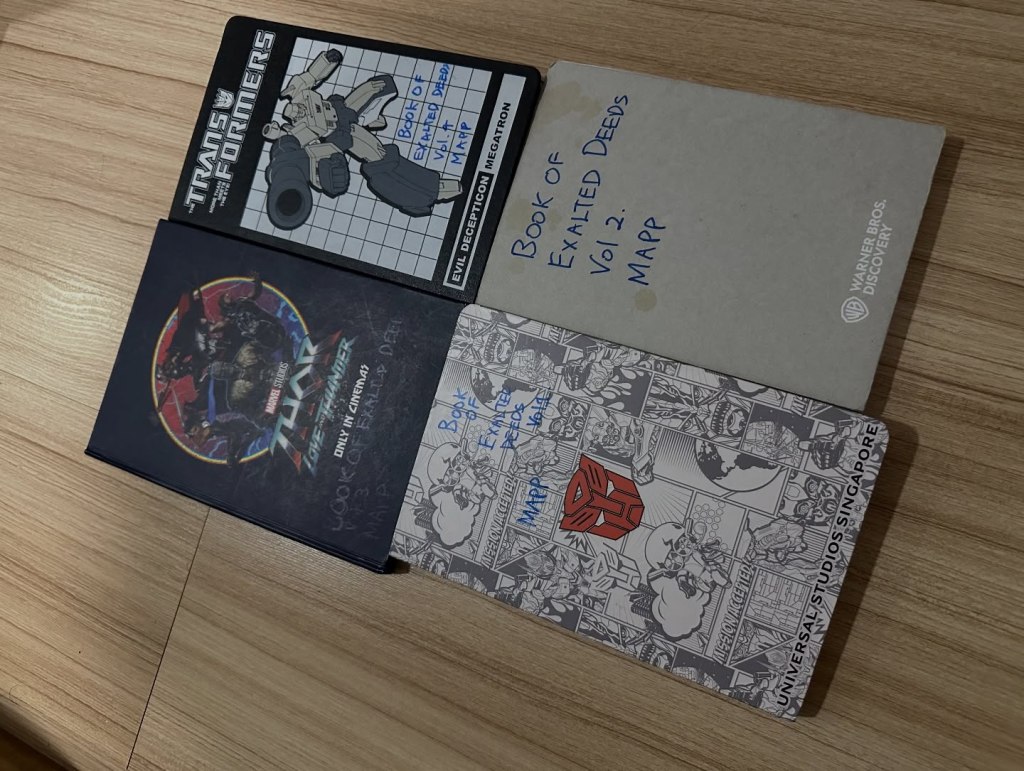
When I headed into the bookstore the other day, a realisation washed over me.
Those authors of world-famous books, those names that we see on the cover of the books – those are people I know.
Those have been lecturers and guest lecturers in my programme.
I know the people whose names are on the book covers.
I get to meet all these brilliant minds and listen to their wisdom straight from the source.
It’s like the purest form of knowledge that you can receive and I’m drinking straight from the fountain of it.
MAPP has been described as drinking from the firehose and while I’ve never actually done that, I absolutely understand why that comparison is used.
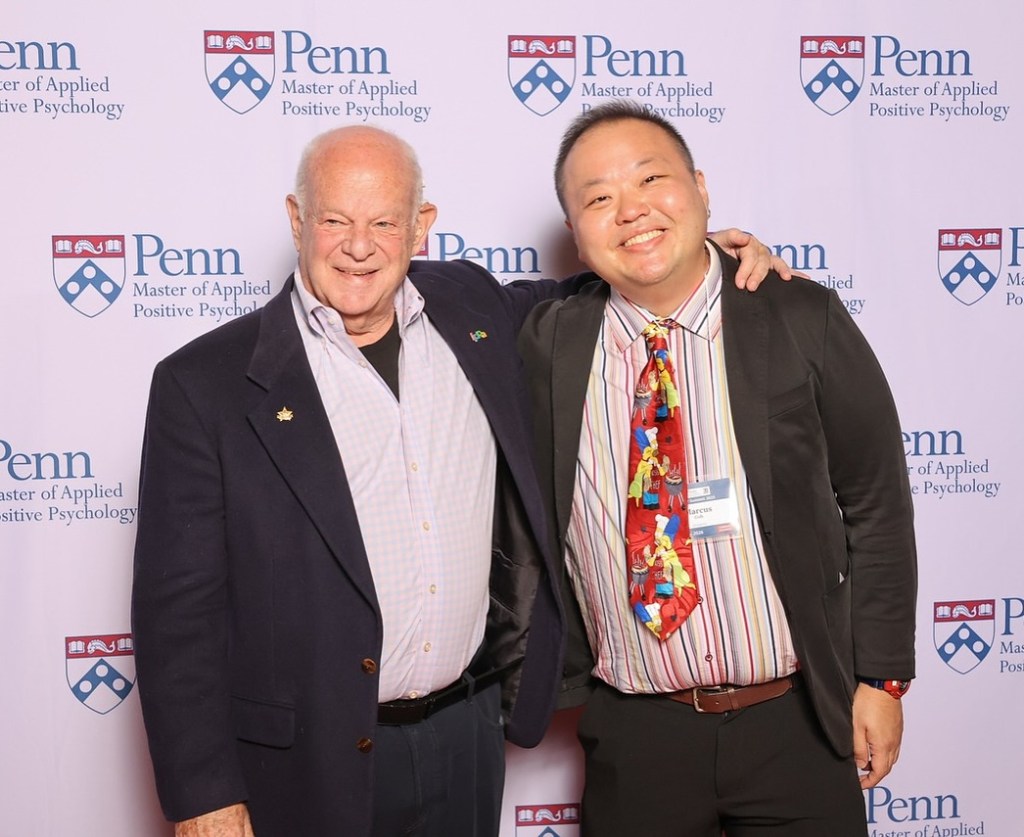
And that I get to listen to, and talk to, Martin Seligman – that Marty knows my name (because I’m a student) is such an honour.
I still can’t get over the fact that Marty knows my name!
Renewed Understanding of Positive Psychology Interventions
When I first learned about positive psychology interventions (PPI) – I only knew them as feel-good techniques that made life a bit better.
Theoretically I understood the why, cognitively I understood how they worked, and mechanically I could execute them.
But it’s through MAPP that I’ve gained a better – stronger understanding of why they work. We’ve been asked to do several PPIs as a form of experiential learning.
And I get it now.
I understand things like the Best Possible Self in such depth.
I truly feel the PPIs that I practice now. Earlier in the semester they were effortful to execute, but now they’re easeful.
And it’s gotten to the point that I’ve even integrated PPIs into my work – into my business. That I teach other people to do it and we do it as part of work.
It’s like uncovering a secret level of a special skill that you never knew existed.
It’s like learning that buff you’ve been using actually has a whole other ream of benefits to it.
It’s like understanding how the tool you wield works and how effective you can be with it.
The Application of Positive Psychology in My Life
Even though it’s only been 4 short months, it’s been life-changing.
Physical: I’ve started running. I’m not a cardio person but I willingly, voluntarily went for a run because I wanted to relieve some stress. That I would turn to running – running! – as a form of stress relief speaks volumes to how much my mindset has changed. Also physical activity is a great PPI.
Mental: I’ve learnt how to change my own thoughts through reappraisal and disputation. That I can shift my own emotions and perspectives and change the automatic thoughts in my head – this is amazing. This is about the mastery of your own thoughts, your own mind, your own head.
Habit: Some good habits have started to stick that took ages too before. A daily stretching habit is one. Doing at least one unit of exercise a day is another. Installing habits that prove to be so integral to wellbeing have gotten easier, and in fact, they’ve surpassed previous attempts at such habits.
Mindfulness: To be able to set, and re-set intentions. To be able to pause after a stimulus and wait before responding. To take those three deep breaths before deciding on doing anything. I’m not the most meditation-focused person but it has been a point of mastery and improvement for me.
Hope and optimism: I’ve generally had a fair amount of efficacy and seen life as having many possibilities. But now, I see life as being ripe with possibilities, that they’re there for the taking. There’s this greater confidence and efficacy in myself to be able to achieve those possibilities, because, perhaps, of a change in explanatory style.
Acceptance: There are many more things I’ve accepted, such as my desired Type A people who can get things done, the acknowledgement of what I severely disliked, and parts of my selves that never got fully owned. Acceptance ranges across many areas in life, and with that comes authenticity. In fact, I daresay that acceptance is all about active authenticity.

Tips for International MAPP Students
Okay I can’t leave this article without giving some tips so here they are! I think I’m most equipped to give these tips as someone who has to fly there every six weeks.
1. Accept your body’s sleep and wake times during MAPP: Depending on where you’re flying from (I’m flying from Singapore, which is a 12-13 hour difference depending on whether there’s Daylight Savings), your sleep cycle is going to be out of whack. Having the grace and self-compassion to say it’s okay to sleep when the body is sleepy and wake up when the body feels rested, even if it’s out of sync with wherever you are, has worked wonders. It places less mental stress on waking up at the “right time” and ironically, that helps your body clock to adjust faster.
2. Sync Google Calendar to Canvas: MAPP uses Canvas as their LMS, and syncing your Google Calendar should be the very first thing you do. There’s a swath of assignments, readings, lectures, deadlines – some of which you may overlook. Having them all on your calendar helps, even if it may clutter it up a bit. It’s saved my bacon a few times when I didn’t realise something was due.
3. Treat it like a part-time, if not full-time job: It doesn’t really say whether MAPP is a part-time or full-time degree but there is a lot of work. So treating it like a part-time job, meaning that you carve out time for it, is critical to your success. It will take a lot of time out of your life. But it will all be worth it when you see the changes in yourself.
4. Schedule in your recharging and fun activities: One thing I did was to clear my non-essential calendar (ie social gatherings and hobbies) so that I could make time for MAPP. This was not a good decision because it didn’t allow me to recharge. Yes, you’ll be busier – but having those pre-arranged meetups not only gives you the energy to carry on, it forces you to time-bound your studying so that you’re more efficient.
5. Take the first three weeks as your introduction to the game: The first three weeks have the steepest learning curve. I read up and prepared but I realised it was like playing Super Mario. You can read all the guides you want, but nothing compares to actually playing the game and falling into pits and bumping into Goombas and getting Fire Flowers. MAPP’s first three weeks are like that – you will fall into pits, you will bump into Goombas. Treating it like the first time you’re playing a game will give you a lot of grace and leeway to explore what works for you.
6. Set aside time to explore the syllabus: There’s so much material for each module that it’s unlikely that you’ll appreciate the sheer breadth and depth of it the first time you go through it. Taking the time to revisit the syllabus, the module on Canvas, the different readings (both compulsory and optional) that you have to do helps you understand the “neighbourhood” of MAPP better, and where to go to when you do your assignments.
7. Make friends: The most important part of MAPP has been the people – and so it’s important to get to know your classmates. Reach out. Drop a message. Go for meals together. Chit chat with someone during breaks. You should be mindful of your own social battery, but as much as possible you should create connections while you’re there. It’s the part you’ll take away after the course.

Life Will Never Be The Same Again
I don’t know what the second semester of MAPP will hold – nor do I know what life itself will hold.
But I know it’ll never be the same again.
Because it’s about change. All this is about change. Life is about change.
That’s the most important part of it all – not to roll with the changes, but to adapt with whatever changes life brings you.
Change is loss, but change is also growth.
And that’s what MAPP has been all about.
Growth.
You might also want to read:
 Happiness for Busy People
Leave a comment